Advanced CO2 Injection for Red Stem Plants in High-Light Tanks
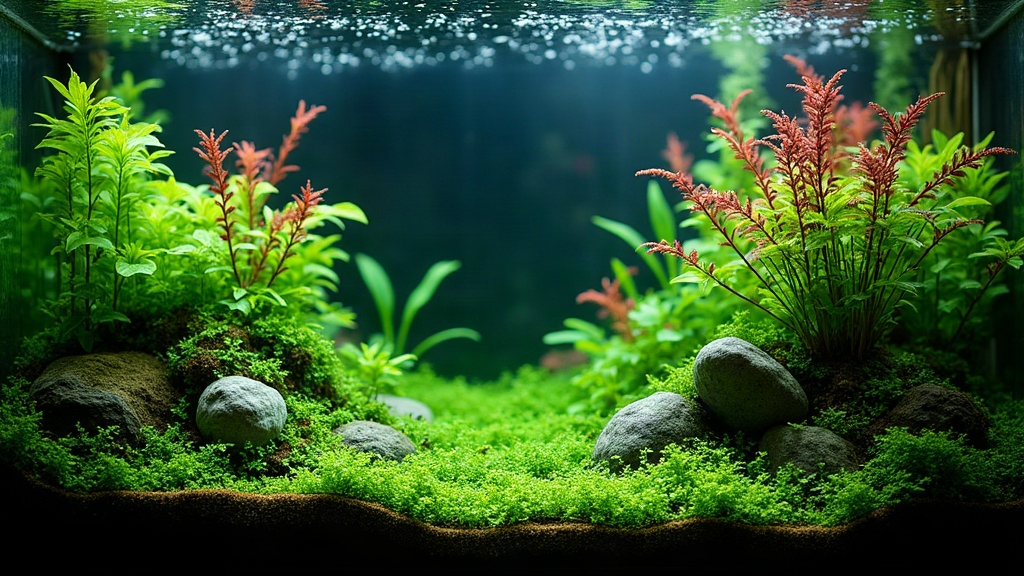
Achieving vibrant red stem plants like Rotala rotundifolia, Ludwigia, and Alternanthera reinesii in a high-light Dutch aquarium really comes down to one thing above everything else: precise, well-timed CO2 injection. Skip that, and even the reddest cultivars will fade back to green under intense lighting, no matter how much iron or fertilizer you’re dosing. This guide walks through exactly how to dial in CO2 for maximum color intensity and healthy growth.
Why CO2 Drives Red Coloration
Red pigmentation in stem plants (those anthocyanins) shows up as a stress response, triggered by intense light plus abundant nutrients. But if CO2 is the bottleneck, plants simply can’t process that light energy efficiently. Instead of turning red, they bleach, melt, or just sit there green. In high-light Dutch setups, think 2-3+ watts per gallon equivalent or 50-80 PAR at the substrate, CO2 demand climbs fast compared to a low-tech tank.
The rule of thumb: light, CO2, and nutrients have to scale together. Bump the light without matching CO2, and you’ve just created the #1 cause of algae outbreaks and stunted red stems.
Target CO2 Levels
- Aim for 30-40 ppm dissolved CO2 at lights-on, measured with a drop checker using 4dKH reference fluid (lime green, edging toward yellow-green).
- Don’t push past 40-45 ppm. Fish and shrimp stress, rapid gilling, gasping at the surface, becomes a genuine risk in high-light tanks with dense stocking.
- Pair your drop checker with a pH profile: a steady 1.0-1.2 pH drop from your degassed baseline confirms you’re hitting consistent saturation.
Timing: The Overlooked Variable
Here’s the thing most people miss: CO2 problems in high-light tanks are rarely about concentration. They’re about timing.
- Start CO2 60-90 minutes before lights turn on. That window gives you full saturation before plants start photosynthesizing in earnest.
- Keep CO2 running through the whole photoperiod. Don’t cut it off early. Red stems need steady CO2 during peak light hours, especially those first 2-3 hours when photosynthetic demand spikes.
- Shut CO2 off 30-60 minutes before lights-off to limit night-time pH swings and stop wasting gas, but never kill it at the exact same moment as the lights unless your drop checker confirms it’s still saturated.
Equipment Setup for High-Demand Tanks
- Pressurized CO2 with a quality regulator. At this level, needle valve precision isn’t optional. A bubble counter alone won’t give you the fine control you need.
- Inline atomizer/diffuser mounted on the filter return line, not a ceramic diffuser sitting in the tank. Inline diffusion gets you close to 100% dissolution efficiency, which matters a lot for keeping ppm stable in a large or densely planted tank.
- Solenoid valve on its own timer, separate from your lighting timer, so you can stagger that pre-lights CO2 start properly.
- Check flow rate weekly. Needle valves drift as cylinder pressure drops with use, so a quick bubble counter check every few days will save you from a slow, silent CO2 crash.
Pairing CO2 with Nutrients for Red Color
CO2 by itself won’t turn a stem red. What it does is unlock the plant’s ability to actually use the light and nutrients you’re already providing. Pair strong CO2 with:
- Chelated iron sources like Fe-DTPA or Fe-EDDHA. Reinesii and Ludwigia in particular respond hard to iron availability.
- Daily potassium and micros (EI dosing or a leaner approach, depending on how much algae risk you’re willing to tolerate).
- Slightly lower nitrate relative to phosphate. Plenty of aquascapers report their red stems intensify when nitrogen is kept moderate rather than pushed high, though this varies by species and is worth testing gradually rather than assuming.
Troubleshooting Common Issues
- Green at the base, red only at the tips: Usually CO2 is fine but light intensity or duration hasn’t caught up relative to your CO2/nutrient levels. Try stretching the photoperiod slightly or bumping the light.
- Melting or curling new growth: This is often about inconsistent CO2, not too little of it. Watch for a drop checker that changes color throughout the day; that’s a tell for leaks or a regulator issue.
- Algae showing up on otherwise well-colored red stems: Nine times out of ten this is a nutrient imbalance, not a CO2 shortfall. Check your dosing schedule before you reach for more CO2.
Conclusion
Vivid red stems in a high-light Dutch tank aren’t the result of one clever trick, they’re the payoff of a tightly coordinated system. Stable 30-40 ppm CO2, started well ahead of lights-on and diffused efficiently, combined with disciplined nutrient dosing, gives red stem plants the physiological green light (pun intended) to show their full color. Check your drop checker daily, keep an eye on how your fish and shrimp are behaving, and make changes in small steps. Red stems reward patience and precision far more than they reward bold moves.