Keeping Pygmy Corydoras in a Leaf-Litter Nano Community Aquarium
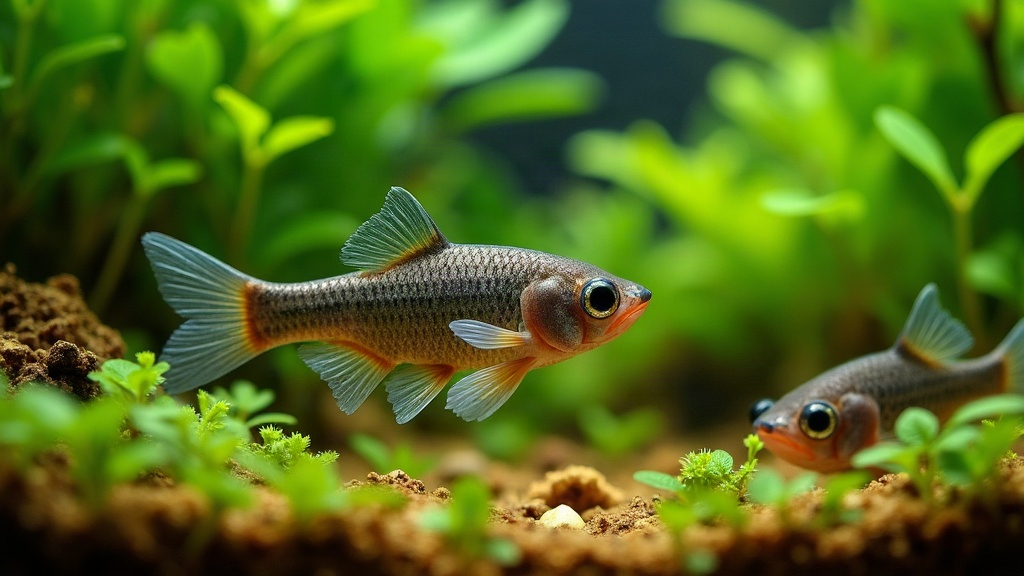
Pygmy Corydoras in a Leaf-Litter Nano Tank
Pygmy corydoras (Corydoras pygmaeus) might be the single best nano catfish you can put in a small, naturalistic aquarium. Set them up over a bed of leaf litter and you’ll see something most people don’t expect from a cory: they shoal in open water, forage constantly, and swim mid-column rather than glued to the glass. On top of that, the leaf litter keeps the water soft and stable, which is exactly what this species wants. Below is what you actually need to know about tank size, substrate, tankmates, feeding, and breeding if you want this nano community to thrive rather than just survive.
Why Pygmy Corydoras Suit Leaf-Litter Tanks
Most corydoras spend their lives parked on the substrate, nose down, barely moving. Pygmy cories break that mold. They shoal in open water almost like tiny schooling fish, hovering just above the leaf litter and fine plant growth instead of hugging the bottom. That quirk alone makes them a great centerpiece fish for a nano blackwater setup, for a few reasons:
- Leaf litter (Indian almond, oak, or guava leaves) leaches tannins that soften and acidify the water, roughly recreating the blackwater streams of the Amazon basin where this species comes from.
- The litter layer breeds its own microfauna, infusoria, biofilm, microcrustaceans, which the cories graze on nonstop. It’s basically a self-replenishing snack bar.
- Dim, tea-colored water calms them down. Fish that would otherwise hide in bright, stark tanks start behaving naturally and confidently instead.
Tank Size and Setup
A single pygmy cory shoal doesn’t need nearly as much room as people assume, but don’t ever keep them in small numbers or alone.
- Minimum tank size: 10 gallons (38L) for a group of 8-10. Push that to 12 or more and you’ll notice a real difference, they look more natural in a bigger crowd and skittishness drops off.
- Substrate: Fine, rounded sand. Skip sharp gravel entirely; these fish sift through substrate with sensitive barbels, and rough material will tear them up.
- Leaf litter: Drop in 5-10 dried Indian almond (Catappa) or oak leaves per 10 gallons. Swap in fresh ones every 2-3 weeks as the old leaves break down and stop doing their job.
- Filtration: A gentle sponge filter or a low-flow hang-on-back is plenty. Strong current stresses these fish out fast.
- Lighting: Keep it low to moderate. Floating plants like Salvinia or Frogbit diffuse the light nicely and seem to lower overall stress in the tank.
- Decor: Driftwood, Mopani wood, and clumps of Cryptocoryne or Java fern roots give the cories places to duck into without eating up their swimming space.
Water Parameters
These fish evolved in slow, soft, acidic Amazonian streams. Chasing a perfect number on a test kit matters far less than keeping things stable week to week.
- Temperature: 72-79°F (22-26°C)
- pH: 6.0-7.0 (the tannins do most of the work here anyway)
- GH: 2-8 dGH, soft water is what they want
- Ammonia/Nitrite: 0 ppm, no exceptions. Pygmy cories have almost zero tolerance for poor water quality.
- Weekly water changes of 20-25%, enough to flush out tannin byproducts without wiping out the softening effect you’re trying to maintain.
Feeding
Small fish, big appetite relative to their size. Pygmy cories graze almost constantly and do best with a varied diet of tiny-particle foods:
- Quality micro sinking pellets or wafers
- Live or frozen microworms, baby brine shrimp, daphnia
- Crushed flake scattered over the leaf litter so it settles in naturally rather than floating around
- Let some biofilm build up on the leaves and wood. It’s free food, and it’s always there when you’re not around to feed.
Stick to small portions once or twice a day. Their stomachs are genuinely tiny, and in a nano tank, overfeeding fouls the water a lot faster than people expect.
Good Tankmates for a Leaf-Litter Nano Community
Pick peaceful fish that handle soft, tannin-stained water and won’t bully or outcompete the cories at feeding time:
- Ember tetras or chili rasboras, similarly tiny, similarly peaceful shoalers
- Sparkling gourami, calm temperament, fits the vibe
- Nerite or ramshorn snails, useful for keeping biofilm and algae in check
- Amano or cherry shrimp, happy in the exact same soft, leaf-litter water
Steer clear of anything boisterous: barbs, larger tetras, or bettas with nippy streaks. Pygmy corydoras lose out on food fast against faster, pushier tankmates, and the stress shows.
Breeding Notes
If you’re going to breed any cory species at home, pygmy cories are among the easiest to start with.
- A well-fed, settled shoal often spawns on its own, especially after a cooler water change that mimics a rain event in the wild.
- Eggs get scattered across leaves, glass, and plant foliage rather than guarded in a nest.
- For better survival odds, move a breeding group into a bare-bottom or sponge-filtered tank with leaf litter, away from other fish that might eat the eggs or fry.
- Fry start out on infusoria and biofilm, then graduate to baby brine shrimp and crushed micro pellets as they grow.
Common Mistakes to Avoid
- Too small a shoal: Fewer than 6 fish and you’ll see obvious stress, constant hiding, skittish behavior.
- Sharp substrate: Wears down barbels over time and opens the door to infection.
- Too much flow: These cories like calm water. Crank the filter too high and they’ll just cluster in a corner all day.
- Ignoring leaf replacement: Fully decomposed leaves stop releasing tannins, and if you let too many pile up, they can actually cloud the water instead of helping it.
Conclusion
A leaf-litter nano tank is about as good as it gets for keeping pygmy corydoras. It plays straight into their natural shoaling instincts and gives them the soft, tannin-rich water they’ve adapted to over generations. Keep a shoal of eight or more, use fine sand with plenty of leaf litter on top, keep the flow gentle, and hold your soft-water parameters steady. Pair them with equally calm nano tankmates and you’re set. Get the formula right, and don’t be surprised if you wake up one day to find fry in the tank, a pretty reliable sign that your little ecosystem is doing exactly what it should.