Why Your Aquarium Heater Cycles Constantly in a Small Rimmed Tank
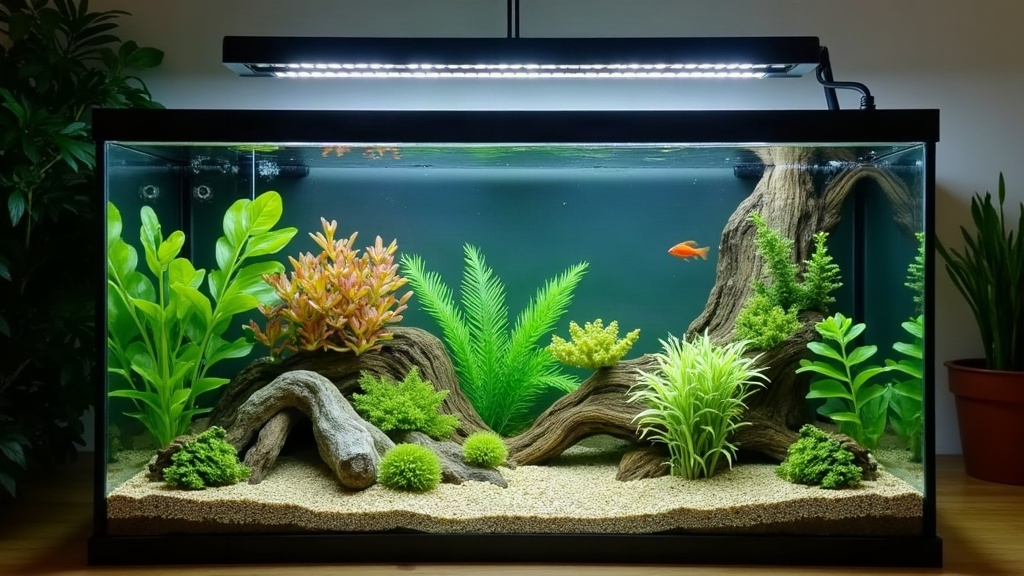
If your heater clicks on and off every few minutes instead of settling into long, steady cycles, you’re not imagining it. This is a classic complaint in small rimmed tanks, usually the 5 to 20 gallon range, and it almost always traces back to a mismatch between heater wattage, water volume, and where the heater actually sits near the surface, where a rim or hood tends to trap heat unevenly. Let’s get into why this happens and what actually fixes it.
Why Small Rimmed Tanks Are Prone to Heater Cycling
1. Oversized Heaters for the Water Volume
Nine times out of ten, the heater is just too strong for the job. Drop a 100-watt heater into a 10-gallon tank and you’re asking it to heat a bathtub’s worth of water with a space heater meant for a garage. The thermostat catches the fast temperature spike, shuts off, and because small volumes lose heat just as quickly as they gain it, the water cools right back down within minutes. Then the heater fires up again. Repeat, forever.
Rule of thumb: aim for about 3-5 watts per gallon in a standard room-temperature setup. A 10-gallon tank usually needs 25-50 watts, not 100-plus.
2. Rimmed Tanks Trap Heat Unevenly
That plastic frame running around the top edge of a rimmed aquarium often ends up housing the thermostat sensor right near the waterline. Problem is, that specific pocket of water runs warmer than the rest of the tank, thanks to weak flow and its closeness to lighting or a hood. The sensor reads this artificially warm spot, shuts the heater off too early, and then the cooler water lower in the tank drags the average back down. Another cycle starts almost immediately. It’s a feedback loop, and the rim is basically feeding it bad data.
3. Poor Water Circulation
A lot of small tanks run on weak filters, or in nano setups, sometimes no real filter flow at all. Without decent circulation, heat just sits in pockets instead of mixing through the whole volume. The heater’s sensor only knows what’s happening in the water touching it, not what the tank as a whole is doing, so you get these erratic on/off bursts that look random but aren’t.
4. Heater Placement Too Close to the Surface or Glass Corner
Mounting the heater horizontally up near the rim is convenient (easy to reach, easy to adjust), but it’s also the worst spot for an accurate reading. Surface water temperature swings with room air temperature far more than people expect, especially with open-top rimless lids or a hang-on-back filter constantly pulling in cooler air from the room.
How to Fix Constant Heater Cycling
- Downsize the wattage. Running a 100W unit in a 10-gallon tank? Swap it for a 25-50W model actually rated for that volume.
- Reposition the heater. Place it in the main water column, ideally near the filter outflow or a powerhead, not tucked under the rim or stuffed into a dead corner.
- Add a small powerhead or boost filter flow. A $10-15 nano powerhead can make a surprisingly big difference in how evenly heat spreads, and it stabilizes the thermostat’s readings almost immediately.
- Check calibration. Grab a separate digital thermometer rather than trusting the heater’s built-in dial. A 2-3°F gap between what the heater “thinks” and what’s actually happening is common, especially with cheaper analog units.
- Consider a controller. An external temperature controller with its own probe, placed well away from the heater itself, will give you far steadier, more trustworthy readings than the heater’s internal thermostat ever will.
- Avoid uninsulated rimless or thin-glass tanks in cold rooms. Small volumes of water get knocked around by ambient temperature swings way more than large ones do. A drafty room at night can undo a lot of good work.
When Cycling Is Actually Normal
Hearing a click every 20-30 minutes as the heater kicks on to hold temperature? That’s not a problem, that’s just the thermostat doing exactly what it’s supposed to. What you’re watching for is rapid, frequent cycling (every 1-5 minutes) or clicking that seems constant and never settles. That pattern points to a real mismatch, not normal operation.
Quick Troubleshooting Checklist
- Confirm heater wattage matches tank size (3-5 W/gallon).
- Make sure the heater sits somewhere with decent water flow, not a stagnant rim corner.
- Cross-check the tank’s temperature with an independent thermometer.
- Improve circulation with a powerhead or by adjusting filter output.
- Replace heaters older than 2-3 years. Thermostats wear out and drift over time, even if the heater still “works.”
Conclusion
In a small rimmed tank, constant cycling almost always comes down to one of three things: too much wattage for the volume, weak circulation, or a sensor parked in a hot spot near the rim that doesn’t reflect the rest of the water. Match the wattage to your actual tank size, move the heater into the main flow path, and double-check the temperature with an independent thermometer, and most cases resolve right there. If the clicking keeps up after all that, it’s probably time to just replace the heater.