Beginner Iwagumi Aquascape: Choosing Stones and Layout Tips
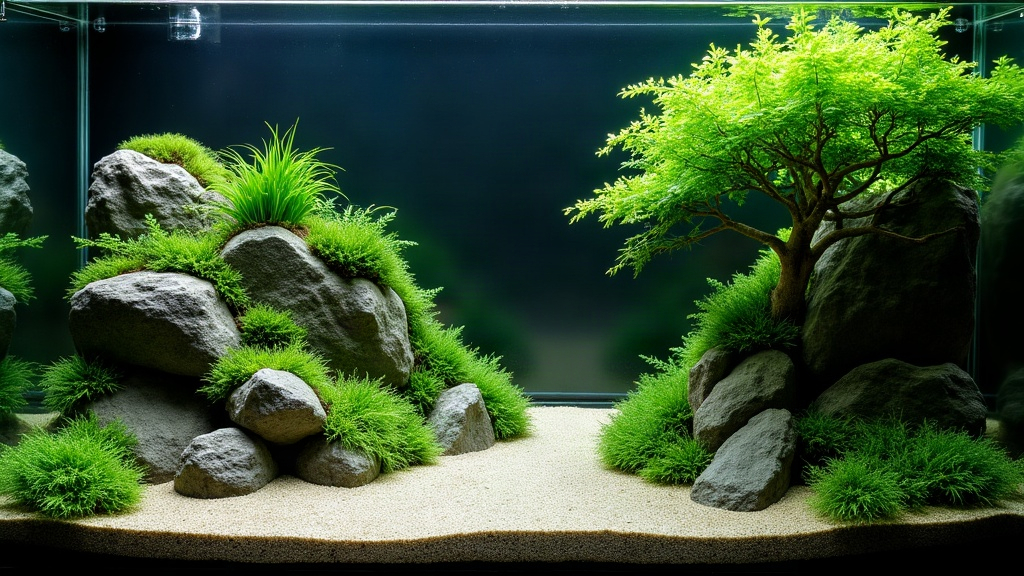
Iwagumi Aquascaping: How to Choose Stones and Avoid the Layout Mistakes That Give You Away
Iwagumi might be the most elegant style in aquascaping, and honestly, it’s one of the easiest to botch. A proper Iwagumi tank rests almost entirely on stone placement plus a small handful of carpeting plants. No driftwood to hide behind, no thick foliage jungle, no trinkets to distract the eye from a bad decision. That bare-bones approach is exactly why so many beginners trip up: every stone, every angle, every gap sits right there in the open. This guide covers how to pick the right stones and dodge the layout errors that make an Iwagumi look staged rather than found in nature.
What Makes Iwagumi Different
Iwagumi means “rock formation” in Japanese, and the style follows a fairly strict set of rules borrowed from traditional Japanese garden design. A typical layout uses:
- Oyaishi, the main stone: largest, most dominant, sets the tone for everything else
- Fukuishi, the secondary stone: roughly 60-70% the size of the main one
- Soeishi and Suteishi: smaller supporting and accent stones
The whole point is asymmetry that still reads as balanced. Think of a scene you’d stumble on while hiking, not something a draftsman measured out with a ruler.
Choosing the Right Stones
Stick to One Type of Rock
Mixing rock types is the quickest way to kill the illusion. Started with Seiryu stone? Don’t toss in a chunk of lava rock or petrified wood halfway through, no matter how good it looks in isolation. Popular choices for this style:
- Seiryu stone: sharp edges, heavy texture, blue-grey tone; the classic Iwagumi rock
- Ohko (Dragon) stone: rounded, porous, a warmer tan color
- Manten stone: angular, strong veining, good for a more dramatic look
Pick one type and buy more than you think you’ll need. Trust me, you’ll want extra pieces on hand once you start arranging, because the first three combinations you try almost never work.
Look for Natural Erosion Patterns
Decent aquascaping stones show consistent striations, cracks, or weathering, the kind of wear that suggests water and time actually shaped them. Steer clear of stones with flat, freshly-broken faces. They’ll look artificial no matter how cleverly you arrange them, because the eye picks up on that uniformity instantly.
Buy in Odd Numbers, But Vary Sizes
Odd counts (3, 5, 7) tend to produce more natural, asymmetrical groupings than even numbers, which our brains read as “paired” and therefore deliberate. At the same time, don’t buy a matched set of similarly sized rocks. You want a real size hierarchy: one dominant piece, a clear second, then smaller accents trailing down.
Common Layout Mistakes to Avoid
Perfect Symmetry
This is the number one beginner mistake, hands down: centering the main stone, or spacing rocks evenly across the tank like they’re on a shelf. Nature doesn’t do straight lines or even intervals. Push your Oyaishi off-center. The old rule of thirds works well here, roughly one-third of the way into the tank rather than dead center.
Stones That Don’t “Talk” to Each Other
Every stone in the group should relate to its neighbors: matching veining direction, similar erosion texture, that sense they all broke off the same underground formation. Scatter stones with no visual thread connecting them and the illusion collapses the moment someone looks twice.
Ignoring Depth and Burial
Real rock formations sit partially buried, not perched on the substrate like someone set down a piece of furniture. Bury at least a third of each stone’s height. It sounds like a small detail, but this one move does more for realism than almost any other technique on this list.
Overcrowding the Layout
Iwagumi lives or dies on negative space. If you’ve got more than 5 to 7 stones going into a standard 60cm tank, you’re probably overdoing it. Leave open substrate between groupings. Those empty stretches are what make the stones you do have feel deliberate instead of crammed in.
Planting to Support the Stones
Once the stone layout is locked in, add low-growing carpeting plants around the base, Dwarf Hairgrass (Eleocharis parvula) or Monte Carlo (Micranthemum tweediei) are the usual go-to choices. Keep it simple, one or two species at most. The plants are there to frame the stones, not to compete for attention.
Final Check Before You Fill the Tank
Before you add a drop of water, step back and check the layout from a few angles, including straight-on through the front glass. Ask yourself:
- Does one stone clearly dominate the scene?
- Is the arrangement asymmetrical, yet still balanced?
- Do all the stones look like they came from the same rock family?
- Is at least a third of each stone buried in the substrate?
Conclusion
A convincing Iwagumi comes down to restraint, not more materials but sharper decisions about the few you use. Pick one rock type, lean into asymmetry, bury your stones properly, and fight the urge to squeeze in “just one more” piece. Get these basics right and your first Iwagumi will read as a miniature landscape, not a pile of rocks someone dropped into a fish tank.