Rescuing a Leaning Driftwood Layout Without Restarting the Aquarium
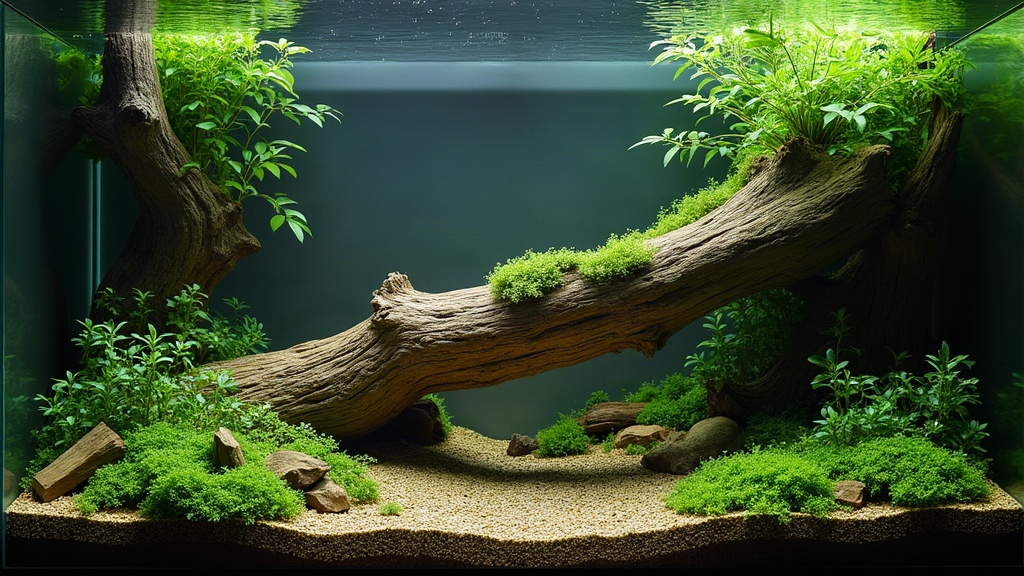
Fixing Leaning Driftwood Without Tearing Down Your Tank
So your driftwood centerpiece has started leaning, drifting, or sliding out of position. First instinct is usually panic: do I need to drain the whole tank? Rip everything out? Almost never. Most leaning driftwood issues trace back to three things: substrate shifting underneath it, the wood still fighting its own buoyancy, or an anchor job that was never really solid to begin with. All three are fixable in place, often in under an hour, without touching your fish, your plants, or wrecking your filter’s bacteria colony.
Why Driftwood Starts Leaning in the First Place
Knowing the cause matters here, because the fix changes depending on what’s actually going on underneath the surface.
- Substrate erosion. Fish that dig (corydoras, cichlids, even goldfish), strong filter flow, or just general bioload buildup over months can slowly wash sand or soil out from under the wood’s base. Eventually there’s nothing left to hold it upright.
- Residual buoyancy. If the wood wasn’t fully waterlogged before you planted it, it can still be trying to float, sometimes six months later. A water change that stirs up the substrate is often enough to let it pop loose a little.
- Root growth shifting the weight. Moss, ferns, or epiphytes mounted on the wood keep growing, and they don’t grow evenly. A clump of Java fern on one side can slowly tip a piece over the course of several weeks without you noticing day to day.
- Poor initial placement. Wood balanced on a single point instead of a flat, stable base is an accident waiting to happen. A net sweep during a water change, a gravel vac bumping the base, that’s sometimes all it takes to knock it off-center.
Step-by-Step Rescue Without a Full Teardown
1. Identify the Real Problem Area
Drain the water down a few inches with a python or siphon. You don’t need to empty the tank, just enough to give yourself working room without having to net every fish out (which, let’s be honest, is more stressful for them than almost anything else you could do). Once you’ve got some clearance, gently press on the wood. Does it shift at the base? Rock on a single pivot point like a seesaw? Or does it feel like it’s still trying to lift off the substrate? That tells you which fix you need.
2. Re-anchor Instead of Re-positioning
If the wood itself is fine, structurally sound, just unstable, anchoring beats moving it to a new spot every time.
- Suction cup mounts. Clear acrylic mounts with a small screw point work well here. Glue one to the underside of the wood with aquarium-safe cyanoacrylate gel, then stick it to the glass. Once plants fill in around the base, it’s invisible.
- Slate or lava rock base. Slide a flat piece of slate under the submerged end of the wood and fix it in place with pre-drilled, aquarium-safe stainless steel screws. The slate’s own weight does most of the anchoring work for you.
- Fishing line or mesh. In stem-plant-heavy tanks, loop clear monofilament around the wood and tie it off to a hidden rock. It stops slow drifting over time and nobody will ever spot the line.
3. Rebuild the Substrate Support
If erosion is the culprit, piling more soil against the base is a temporary band-aid at best, it’ll just wash out again in a few weeks. Better approach:
- Pack aquarium-safe rocks or lava rock rubble underneath and around the base. Think of it as a permanent shelf the wood can rest on.
- Cap it with your display substrate (sand, aqua soil, whatever you’re running) so it still looks seamless from the front glass.
- Bonus: this is actually closer to how driftwood settles in real streams, wedged against rocks, so the final look tends to read more natural anyway.
4. Deal With Residual Buoyancy
Still trying to float after months in the tank? It probably wasn’t soaked long enough before you planted it. Two options:
- Pull it out briefly, attach a hidden ceramic or lead anchor strip to the underside, and put it back.
- Or just keep weighing it down with rocks for another 4-6 weeks. Most driftwood fully saturates and gives up the fight within 2-3 months of continuous submersion.
Minimizing Stress During the Fix
- Do the work during a scheduled water change instead of creating a separate disturbance.
- Leave fish in the tank when you can. Lowering the water a few inches and working carefully is far gentler on them than a full catch-and-hold session with a net.
- Work around root balls, not through them. Uprooting nearby plants just to fix one piece of wood creates two problems instead of one.
- If you stir up cloudiness, spot-clean it with a fine-mesh net or a diatom filter. Save the large water change for your regular schedule.
When a Partial Teardown Is Actually Necessary
Sometimes the wood has shifted far enough to crush stem plants, crack a glass seal, or trap a fish in a gap it can’t back out of. At that point, stop fighting it. A partial rescape of just that corner, pulling the hardscape, fixing the anchor on a table, replanting that one section, is the right call. That’s not the same as restarting your tank. It’s a localized fix, and your biofilter, your fish, and the rest of your layout stay completely undisturbed.
Final Thought
A leaning driftwood piece almost never means you need to start from scratch. Nine times out of ten it comes down to a stable base, a real anchor, and a bit of patience while the wood finishes waterlogging. Lower the water, anchor it with slate or a suction mount, rebuild what eroded underneath, and you’ll have your original layout back without resetting months of biological balance or plant growth you worked hard to get.