Dry Start Method vs Submerged Planting for Dwarf Hairgrass
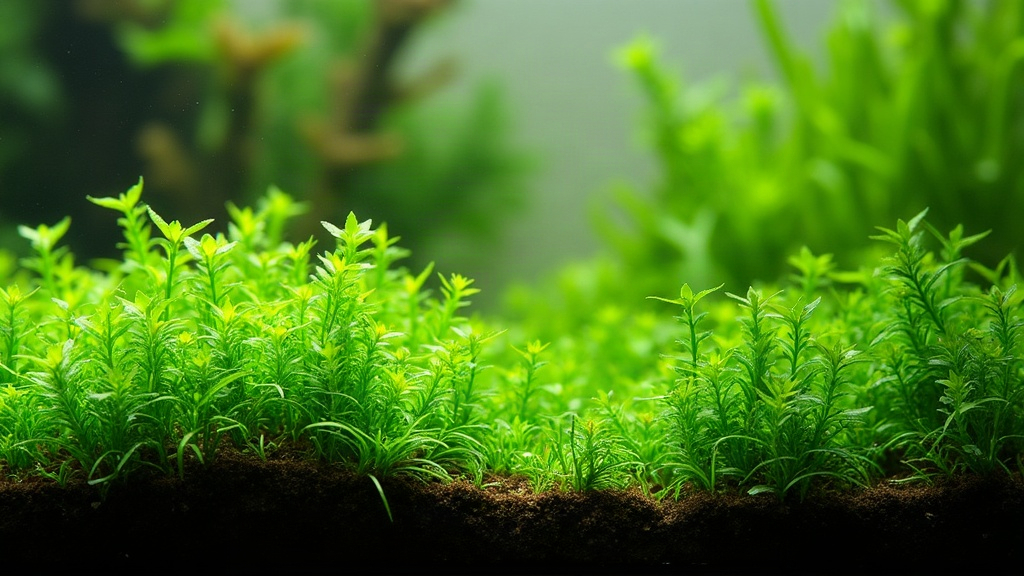
Dry Start Method vs. Submerged Planting: Which Gets You a Thicker Hairgrass Carpet?
Getting a thick, lawn-like dwarf hairgrass (Eleocharis sp.) carpet ranks among the most satisfying wins in freshwater aquascaping. It’s also one of the most common sources of frustration, honestly. The two main approaches, the Dry Start Method (DSM) and traditional submerged planting, produce wildly different results depending on your setup, your patience level, and what equipment you’re running. Here’s a direct, practical comparison to help you pick the right method for your tank.
Quick Answer
Want the densest, fastest-filling carpet and don’t mind waiting 3 to 6 weeks before adding water? Go with the Dry Start Method. Need immediate visual results, or already have strong CO2 and light running, or your tank is already flooded? Submerged planting is the more practical choice for you.
What Is the Dry Start Method?
DSM means planting dwarf hairgrass into a substrate kept moist, not submerged, inside a humid, enclosed environment. Usually that’s a tank covered with plastic wrap or a glass lid, misted daily like a little terrarium.
Why it works so well:
- Plants pull atmospheric CO2 straight through their leaves, and that’s far more abundant and easier to absorb than dissolved CO2 in water.
- No water column means no algae competition during the fragile early growth phase.
- Roots spread freely, with no water flow or curious fish disturbing the substrate.
Typical DSM process:
- Plant small tufts of hairgrass 0.5-1 cm apart into a nutrient-rich substrate (aqua soil works best).
- Mist the substrate once or twice a day, damp but never flooded.
- Cover the tank with cling film or a lid to hold humidity above 90%.
- Give it 6-8 hours of moderate-to-strong light daily.
- After 3-6 weeks, once the carpet looks dense and green, flood the tank slowly to avoid melting the new growth.
What Is Submerged Planting?
This is the traditional route: plant hairgrass directly into an already-filled (or freshly filled) aquarium and rely on CO2 injection, strong lighting, and patience while the plant spreads via runners underwater.
Pros of submerged planting:
- Immediate results. The tank looks “finished” from day one, even if it’s sparse at first.
- No risk of that dry-to-wet transition melt.
- Works fine for tanks already stocked with fish or already cycled.
Cons:
- Growth crawls along without the CO2 boost that atmospheric exposure gives DSM plants.
- Algae (diatoms and green spot algae especially) can colonize bare substrate before the hairgrass catches up.
- Fish, shrimp, or just flow can uproot small plantings before they’ve had a chance to establish.
Side-by-Side Comparison
| Factor | Dry Start Method | Submerged Planting |
|---|---|---|
| Speed to full carpet | Faster (3-6 weeks to dense mat) | Slower (6-12+ weeks) |
| CO2 requirement | Low, atmospheric CO2 is enough | High, pressurized CO2 strongly recommended |
| Algae risk early on | Very low | Moderate to high |
| Fish/shrimp compatibility | None until flooded | Immediate |
| Setup complexity | Requires humidity control, misting | Simple, standard planting |
| Melt risk | Some melt during flooding transition | Minimal if conditions are stable |
Which One Should You Choose?
Choose DSM if:
- You’re building a new scape from scratch and can hold off on adding livestock.
- You want the densest possible carpet before the tank ever touches water.
- You’re running low-tech or no-CO2 and want to give hairgrass its best possible shot.
Choose submerged planting if:
- The tank already has fish or shrimp living in it.
- You’ve got strong CO2 injection (think 2+ bubbles per second in a medium tank) and high light (40+ PAR at the substrate).
- You’re patching a bald spot in an existing mature carpet rather than starting from scratch.
Common Mistakes to Avoid
- Over-misting during DSM: pooling water invites mold and rot instead of encouraging root growth.
- Flooding too fast: always fill slowly, over several minutes, ideally pouring onto a plate or bag so you don’t rip up the carpet you just grew.
- Not enough light during DSM: hairgrass needs real light intensity, not whatever ambient glow your room gives off, to carpet properly even out of water.
- Skipping root tabs: dry-started or submerged, hairgrass is a heavy root feeder. Nutrient-rich substrate or root tabs make a visible, measurable difference in how dense the final mat looks.
Final Thoughts
Both methods can get you a gorgeous dwarf hairgrass carpet, but they’re built for different situations. DSM is the go-to for aquascapers chasing competition-level density right from day one. Submerged planting stays the flexible, practical option for tanks that are already established or lightly stocked. Whichever path you pick, consistent light, a nutrient-rich substrate, and some patience through that early growth phase are what really separate a patchy lawn from a thick, professional-looking carpet.