Canister Filter vs Hang-On-Back Filter for 20-Gallon Tanks
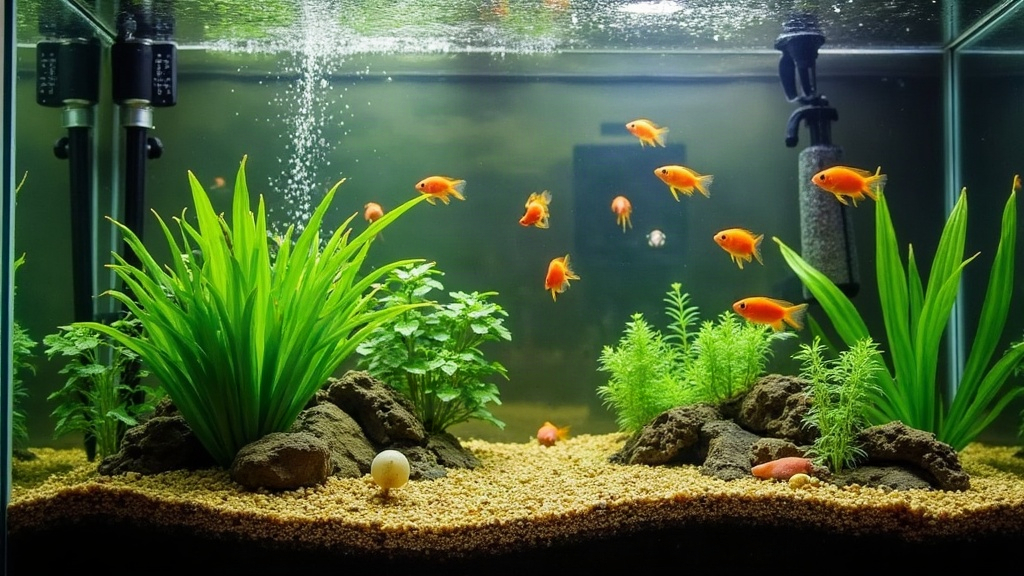
Canister vs. HOB Filter for a 20-Gallon Aquascape: Which One Actually Wins?
Pick a filter for your 20-gallon planted community tank and it really boils down to three questions. How much biological and mechanical filtration do you actually need? How much room, visually and physically, are you willing to give up? And how much noise or scrubbing are you okay dealing with every week? For most 20-gallon planted setups, a solid HOB filter does the job and it’s a lot less fuss to live with. A canister, though, gives you better water quality over the long haul, way more flexibility with media, and a tank surface that stays clean and uncluttered. You just pay more for it, both in dollars and setup time.
Quick Answer
- Go HOB if you want something cheap, low-maintenance, and simple for a moderately stocked community tank.
- Go canister if you’re running a densely planted aquascape, keeping delicate species like shrimp or small tetras, or you want serious media capacity without stirring up the surface.
How Each Filter Actually Works in a 20-Gallon Tank
Hang-On-Back (HOB) Filters
HOB filters, think AquaClear 30/50 or the Fluval C-series, clip onto the back rim of the tank. Water gets siphoned up, run through a cartridge or basket stuffed with mechanical, chemical, and biological media, then dumped back in through that classic waterfall outflow.
Pros:
- Cheap, usually $15 to $40, and you’ll find them at any pet store
- Media swaps take seconds, no tools needed
- No hoses to fuss with, no priming, barely dips into the tank
- Cleaning takes under 5 minutes
Cons:
- That waterfall return churns up the surface, which is bad news if you’re dosing CO2 in a planted tank
- Media basket is small compared to what a canister holds
- It hangs right there on the back glass, which can wreck the look of a carefully planned aquascape
Canister Filters
Canisters (the Fluval 107 or Eheim Classic 250 are common picks) live outside the tank entirely, often tucked in the cabinet below, hooked up through intake and output hoses. Water gets pulled through several media trays in sequence before coming back through a spray bar or lily pipe.
Pros:
- Way more media room, which means stronger, more stable biological filtration
- You stack the media however you want: bio-media, floss, chemical resin, whatever the tank needs
- The return can be angled to just skim the surface, perfect for holding onto CO2 in planted setups
- Nothing sticking up or hanging on the tank, so the aquascape stays visually clean
Cons:
- Pricier, expect $60 to $150 or more for a tank this size
- You have to prime it, and the hoses need occasional attention
- Cleaning is a bigger job (pulling it apart, rinsing media) and eats up 15 to 30 minutes
- Can push too much flow for a 20-gallon if you can’t dial it down
What Actually Matters for a Planted Community Tank
CO2 and Surface Agitation
Running pressurized or liquid CO2? Keeping the surface calm matters a lot, because too much agitation off-gasses the CO2 before your plants get a chance to use it. A canister with a spray bar aimed just under the waterline gives you real control here. HOB waterfalls are tougher to tame, though people do rig up baffles or run a pre-filter sponge to soften the flow.
Bioload and Stocking
A typical 20-gallon community tank, say a school of tetras, some rasboras, a couple of bottom dwellers, doesn’t need heavy-duty filtration. A HOB rated for 20 to 40 gallons handles that without breaking a sweat. But once you start adding shrimp colonies, more sensitive fish, or pushing the stocking density higher, the extra biological capacity in a canister starts to pay off, keeping parameters steadier between water changes.
Aesthetics
If you’re the type who obsesses over sightlines in an aquascape, you’ll probably end up on canister filters. Nothing above the waterline except maybe a thin spray bar or lily pipe you can tuck behind a piece of driftwood. HOB filters work fine, but they’re always visible, and that’s a dealbreaker if you’re going for a nature-style layout or a strict Iwagumi.
Noise and Maintenance Routine
HOB filters make that trickling sound, some people find it relaxing, others can’t stand it next to their bed or desk. Canisters run almost silently, though they’ll hum or gurgle if air gets trapped inside. For weekly upkeep, HOB is the easy winner: rinse the cartridge, pop it back in, done. Canister cleaning is more of a once-a-month chore, most people do it every 4 to 6 weeks.
Cost Over Time
- HOB: cheap to buy, but those $5 to $10 cartridge replacements every month or two add up faster than people expect.
- Canister: bigger bite upfront, but the media (ceramic rings, bio-balls) can last years, so it actually ends up cheaper down the road.
Real-World Recommendation
For a 20-gallon community tank with light to moderate planting and normal stocking (tetras, livebearers, a handful of bottom feeders), a HOB filter rated for 30 to 40 gallons, run on a lower flow setting, is more than enough and keeps your costs down.
If you’re building a dedicated aquascape with dense planting, CO2 injection, and you actually care how it looks, spend the extra money on a compact canister filter like the Fluval 107 or Eheim Classic 150. The cleaner sightlines and finer flow control are worth the added cost and the extra time spent cleaning it.
Conclusion
Either filter can keep a 20-gallon community tank thriving, they just serve different needs. HOB filters win on price, simplicity, and quick weekly maintenance, great for a laid-back community setup. Canister filters win on raw filtration power, flow control, and how the tank looks when it’s all set up, ideal if you’re serious about aquascaping and running CO2. Pick the one that actually matches what your tank needs instead of just going with whatever’s trendier, and you’ll end up with better water and a healthier, better-looking tank either way.