Fixing Cloudy Water After Adding Aquasoil to a Newly Planted Aquarium
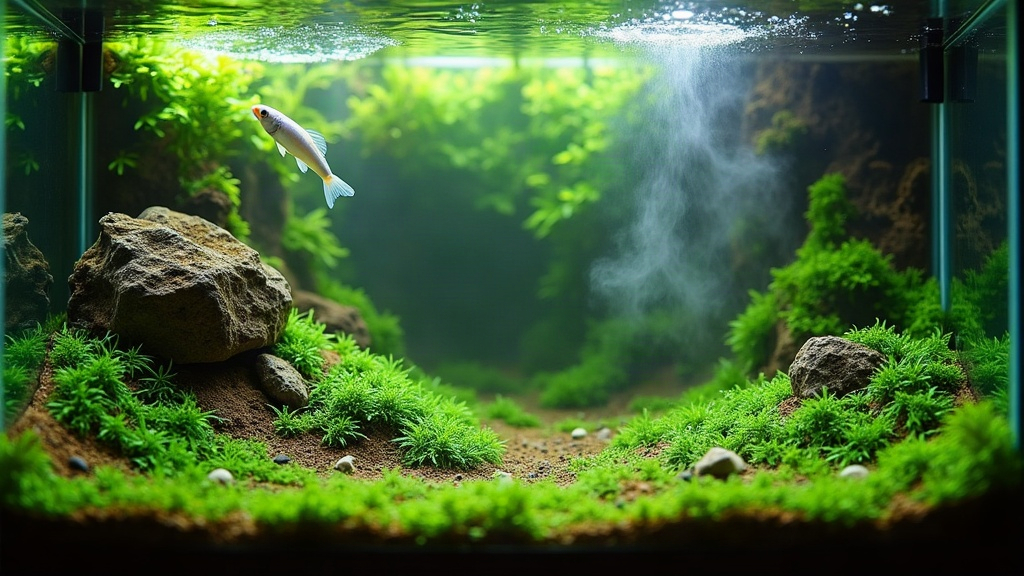
Why Your Tank Turns Cloudy After Adding Aquasoil
Cloudy water after adding aquasoil is probably the single most common freak-out moment for anyone starting a planted tank. Good news: it’s also one of the most harmless. Nine times out of ten, what you’re looking at is just fine dust from the substrate floating around in the water column. Give it a few days, sometimes up to two weeks, and it settles on its own. Still, there are a handful of things you can actually do to speed the process along, and a few mistakes that will make it drag on longer than it needs to.
Why Aquasoil Causes Cloudy Water
Aquasoil, whether it’s ADA Amazonia, Fluval Stratum, or one of the countless similar products, is basically clay-based soil that’s been fired into small porous granules. The problem is that these granules are a little fragile. Between the factory, the shipping box, and you dumping the bag into your tank, they knock against each other and shed material. What ends up in your water is a mix of:
- Fine dust particles, the culprit behind that white or gray haze
- Organic compounds, tannins and a bit of ammonia leaching out of the soil
- Microbubbles, from CO2 injection or filter turbulence, which can be mistaken for cloudiness at a glance
Here’s the part that trips people up: unlike gravel or sand, most aquasoil brands are specifically not supposed to be rinsed before you use them. Rinsing breaks the granules apart even more and makes the dust problem worse, not better. So if your tank looks like a snow globe on day one, that’s not you doing something wrong. That’s the product behaving exactly as expected.
Is Cloudy Water From Aquasoil Dangerous?
Usually not, especially if you haven’t added fish yet. The haze itself is just inert clay particles floating around, nothing toxic about it. What you actually need to keep an eye on is the ammonia spike. New aquasoil dumps a fair amount of nutrients into the water during the first 1 to 3 weeks, and ammonia is part of that package. This is exactly why most planted tank veterans push the “silent cycle” approach:
- Run the tank fishless for 2 to 4 weeks (sometimes called a dry start method)
- If you can’t wait and add fish early, test ammonia and nitrite regularly
- Never drop sensitive fish into a tank that’s less than a week old with fresh aquasoil in it
How to Clear Cloudy Aquasoil Water
1. Let the Filter Do Its Job
A mechanical filter loaded with fine floss or a polishing pad will slowly trap the suspended particles. Don’t turn it off thinking you’re helping. Flow is literally what pulls the dust out of suspension and into the filter media.
2. Add a Flocculant or Clarifier
Something like Seachem Clarity or API Accu-Clear works by clumping fine particles together (flocculation), which makes them heavy enough for your filter to grab. If you need the tank looking presentable within 24 to 48 hours, say for a photo or because guests are coming over, this is your fastest route.
3. Use Extra-Fine Filter Media
Swap your usual media for polyester filter floss, a micron filter sock, or better yet, a diatom filter for a day or two. Diatom filters in particular chew through clay dust fast. I’ve seen tanks go from milky to glass-clear in a matter of hours with one running.
4. Do a Partial Water Change, Carefully
Pull out 20 to 30% of the water with a siphon hovering just above the substrate, not digging into it. If things are really bad, repeat this every day or two for a few days. Skip the temptation to do a full water change early on; it just sets back the beneficial bacteria that are trying to establish themselves.
5. Avoid Stirring the Substrate
Every poke, every replant, every vacuum pass near the aquasoil kicks more dust back into the water. Use tweezers or a planting tool for adjustments instead of shoving your fingers in there.
6. Let Gravity and Time Work
Honestly, if you’re not in a hurry, doing nothing is often the smartest move. Keep the filter running, keep lights and CO2 steady, and check back in 3 to 7 days. Most aquasoil haze clears up on its own without you lifting a finger.
What NOT to Do
- Don’t rinse the aquasoil once it’s already in the tank. That destroys the granules and just creates more dust than you started with.
- Don’t do a 100% water change. You’ll wipe out beneficial bacteria and stress out any new plants.
- Don’t add fish while the water’s still heavily clouded. Wait until it clears and both ammonia and nitrite test at zero.
- Don’t keep dumping in clarifier after clarifier. Overusing it can mess with pH or oxygen levels, especially in smaller tanks.
When Cloudy Water Is NOT From Dust
If the cloudiness shows up after the first week, or if it looks milky white instead of gray or brown, you’re probably not dealing with dust anymore. That’s more likely a bacterial bloom, usually triggered by too much organic waste or overfeeding while the tank is still cycling. It’s a different animal, but it’s also usually self-correcting. Give the nitrogen cycle another 1 to 2 weeks to finish establishing and it typically clears up on its own, no water changes required.
Quick Troubleshooting Checklist
- Cloudy on day 1-3, gray or brown tint: normal aquasoil dust, just wait it out
- Cloudy after week 1, white/milky: bacterial bloom, let the cycle finish
- Cloudy and smells off: possible rot or overfeeding, look for decaying matter
- Still cloudy after 3+ weeks: test ammonia and consider adding fine filter media or a diatom filter
Conclusion
Cloudy water after aquasoil is just part of setting up a planted tank, not a warning sign that you’ve messed something up. Keep the filter running, don’t go poking around the substrate more than you have to, and reach for a flocculant or fine filter media if you’re impatient. Stay patient, keep conditions stable, and within one to two weeks your tank should be clear and ready for your plants to root in and settle down for the long haul.