Creating a Blackwater Biotope Aquascape for Apistogramma Cichlids
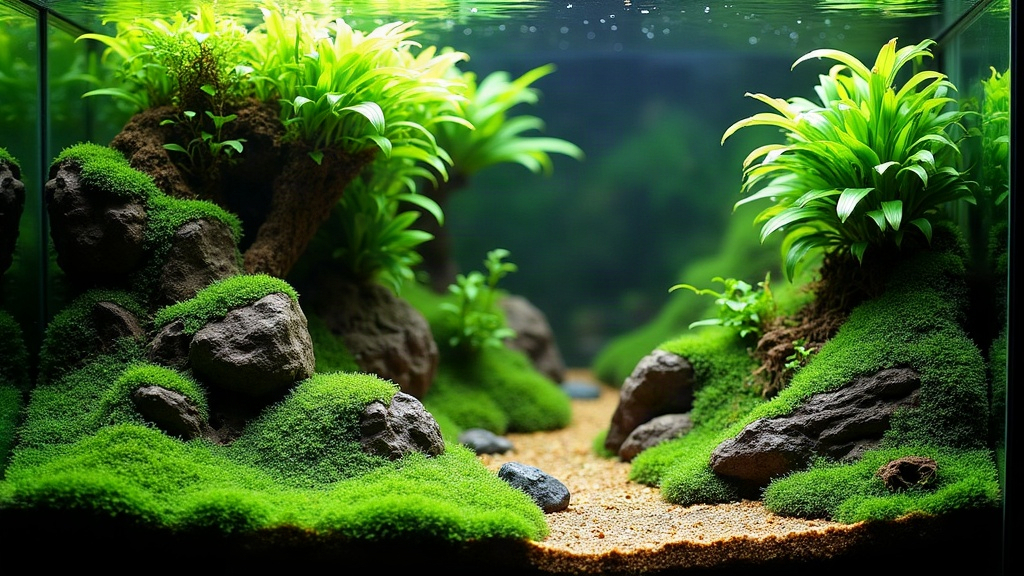
Blackwater Biotope Aquascapes for Apistogramma Cichlids
Building a blackwater biotope for Apistogramma means recreating the soft, acidic, tannin-stained rivers of the Amazon and Orinoco basins. This is the water these dwarf cichlids actually evolved in, not some arbitrary design choice. Get it right and you’ll see richer colors, more natural spawning, and fish that are simply healthier, because you’re working with their biology instead of against it.
Why Blackwater Matters for Apistogramma
These fish come from slow, leaf-littered streams where decaying leaves and wood leach tannins and humic acids into the water column. The result is that tea-stained water you’ve probably seen in photos, and it carries some very specific traits:
- pH between 4.5 and 6.5 (a lot of species actually want it under 6.0)
- Very low general hardness (GH 1–4) and carbonate hardness (KH 0–2)
- Minimal mineral content, with conductivity often dipping below 50 µS/cm
Will Apistogramma survive in hard, alkaline tap water? For a while, sure. But their colors fade, their immune systems weaken, and breeding becomes a long shot at best. Set up a proper blackwater tank and most of that stress just disappears.
Setting Up the Water Chemistry
Start with the Right Base Water
Straight tap water is almost always too hard and too alkaline for this kind of setup. Two options work well:
- RO (reverse osmosis) water, remineralized with a small dose of GH booster
- A mix of RO and tap water, blended until you hit your target hardness
Shoot for GH 2–4 and pH 5.5–6.5 to start, then fine-tune depending on which Apistogramma species you’re keeping. A. cacatuoides, for instance, handles slightly harder water just fine, while A. agassizii or A. borellii are far pickier.
Add Tannins Naturally
Forget chemical pH-down products. They swing unpredictably and can crash your tank overnight. Stick with natural tannin sources instead:
- Catappa (Indian almond) leaves, roughly 2-3 per 10 gallons, swapped out monthly
- Alder cones, which release tannins more slowly and give you a longer-lasting tint
- Driftwood, ideally tannin-heavy types like Malaysian or Mopani wood
- Peat moss, either in the filter or mixed into the substrate
These botanicals don’t just tint the water. They release humic and tannic acids with mild antifungal and antibacterial effects, and that alone can make a real difference in fry survival rates.
Substrate and Hardscape
Substrate
Go with fine, dark sand. Black or dark brown sand mimics the leaf-covered riverbeds these fish dig through and forage in constantly. Steer clear of crushed coral or anything that nudges pH upward, since that defeats the whole point.
Wood and Leaf Litter
Build the tank floor in layers:
- Spider wood or Malaysian driftwood branches arranged to create caves and break up sightlines
- A thick bed of catappa and oak leaves, left alone to slowly decompose
- Small scattered clusters of twigs or botanicals (alder cones, casuarina pods), both for looks and for the extra biofilm surface area
Leaf litter isn’t just there to look authentic. Within a few weeks it becomes a feeding ground for infusoria and microfauna, which fry depend on heavily in their first days of life.
Plants That Work in Low-Light, Soft Water
Real Amazon blackwater habitats tend to be sparsely planted, mostly because tannin-stained water blocks so much light. A few species handle these conditions well:
- Cryptocoryne species (wendtii, parva), which tolerate shade and soft water without much fuss
- Java fern and Anubias, both epiphytes that attach directly to wood and skip the substrate entirely
- Floating plants (Amazon frogbit, Salvinia), which cut down light even further and double as fry cover
Filtration and Flow
These cichlids come from still, slow backwaters, not rushing rapids. A sponge filter or a canister filter run at reduced output gives you gentle flow with solid oxygenation, without the turbulence they’re not built for. Sponge filters have the added bonus of being completely fry-safe since there’s no intake to worry about.
Stocking and Tank Mates
A single pair, or better yet a trio (one male, two females), does well in a 20-gallon long tank, provided the hardscape is dense enough to break sightlines and keep aggression down. For tank mates, stick with species that share the same water parameters:
- Small tetras (rummynose, ember tetras)
- Corydoras catfish, especially sterbai or habrosus, both of which handle soft acidic water comfortably
- Otocinclus for algae control
Skip anything from a hard-water background, and avoid fast, aggressive feeders. Apistogramma are slow, deliberate foragers, and they’ll lose out at feeding time against pushier tankmates.
Maintenance Tips
- Test pH and GH weekly until things settle into a stable pattern
- Swap out leaf litter gradually, not all at once, so you don’t trigger sudden chemistry shifts
- Keep water changes modest, around 10-15% weekly, using pre-conditioned, remineralized RO water matched to the tank’s temperature and pH
Conclusion
A blackwater biotope for Apistogramma cichlids isn’t really about chasing a moody, dark look. It’s about rebuilding the exact soft, acidic, tannin-rich conditions these fish need to show full color, breed the way they would in the wild, and stay resistant to disease. Get the base water right, lean on natural tannin sources, use dark sand and leaf litter, and pick shade-tolerant plants, and you end up with an aquascape that’s both beautiful to look at and functionally identical to the streams Apistogramma actually call home.