Fixing Persistent Surface Film in Rimless Planted Aquariums
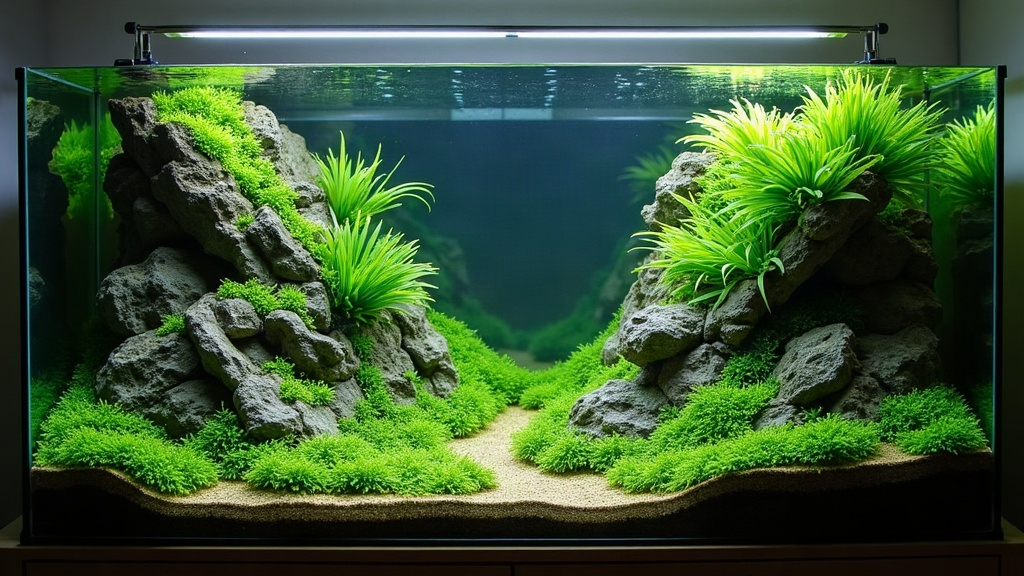
Persistent Surface Film in Rimless Planted Tanks: Causes and Fixes
That greasy, almost rainbow-tinted sheen sitting on top of your rimless tank isn’t random bad luck. Nine times out of ten it’s dissolved organic compounds and protein waste piling up with nowhere to go, paired with the weak surface movement that rimless setups are notorious for. You can’t fix it by tackling just one side of that equation. Cut the organic load but leave the water still, and the film comes right back. Add agitation but keep overfeeding, and you’re just buying time.
Why Rimless Tanks Are Especially Prone to This
Rimless tanks look incredible, there’s no denying it. That uninterrupted glass-to-water sightline is exactly why people pay extra for them. But the trade-off is real: you lose airflow and surface disturbance in the process. A standard rimmed tank usually comes with a hang-on-back filter, a lid, or trim that naturally kicks up ripples and keeps gas exchange moving. Rimless tanks, especially the ones built for aquascaping, usually go a different route:
- Low-flow inline or canister filters, tuned for a quiet, barely-there return
- Lily pipes angled downward to avoid any splash (gorgeous to look at, terrible at breaking surface tension)
- No lid at all, which speeds up evaporation and lets dust, cooking oils, and pollen drift straight onto the water
Put those three together and you’ve basically built a petri dish for surface scum. Proteins, lipids, bacterial biofilm, none of it gets scattered because nothing’s there to scatter it.
Common Causes of Surface Film
1. Protein and Organic Waste Buildup
Every bit of uneaten food, every bit of fish waste, every dying leaf releases proteins and fats into the water column. In a tank with almost no agitation, that stuff doesn’t break down or disperse, it just floats up and concentrates right at the surface.
2. Insufficient Surface Agitation
If your filter outflow or lily pipe sits underwater and barely disturbs the top layer, oxygen exchange takes a hit and the film has nothing physically knocking it apart. It just sits there, layer upon layer.
3. Overdosing Liquid Fertilizers or CO2 Additives
A lot of planted tank keepers dose liquid carbon or all-in-one fertilizers that include organic carriers. Go even slightly overboard, especially with glutaraldehyde-based CO2 substitutes, and you can end up with an oily residue floating on top within a day or two.
4. Dust, Pollen, and Airborne Oils
An open-top rimless tank is basically a dust magnet. Kitchen oils, pollen in spring, regular household dust, all of it lands on the water and spreads into that telltale rainbow sheen.
5. Bacterial Biofilm
If the film looks whitish and foamy rather than oily, that’s a different story entirely. It usually points to a bacterial bloom, often showing up during a new tank’s cycling phase or right after you’ve disturbed the substrate.
Step-by-Step Fix
- Increase surface agitation immediately. Tilt your lily pipe or spray bar slightly upward so the outflow actually breaks the surface. Even a small ripple makes a surprising difference in gas exchange and stops film from settling in the first place.
- Add a surface skimmer attachment. A lot of canister filters sell a skimmer add-on that pulls water right off the top layer. For rimless tanks specifically, this is often the single fix that solves everything else.
- Reduce feeding and remove debris promptly. Overfeeding is, hands down, the biggest long-term cause of organic buildup. Feed only what your fish can finish in 1-2 minutes, no more.
- Check fertilizer and CO2 dosing. Cut your dosing by 25-30% for a week and watch what happens. If the film clears up, you’ve found your culprit.
- Do a surface-level water change. Drag a cup or a folded paper towel across the surface to physically lift the film off before doing your regular partial water change.
- Improve filtration media. Dropping in a thin layer of filter floss or a polishing pad catches fine organic particles before they ever make it to the surface.
- Cover the tank partially. A sheet of glass propped up with a small gap cuts down on airborne dust without completely killing that open, rimless aesthetic.
When to Worry
If you’re seeing an oily film that won’t quit, and on top of that your fish are gasping at the surface or your plants have stopped growing, that’s not a cosmetic issue anymore. Oxygen levels are genuinely compromised at that point, and skimming the surface alone won’t cut it. Want a rough read on dissolved oxygen without buying a test kit? Watch your fish at dawn. That’s when oxygen is at its lowest point in a 24-hour cycle, and any gasping behavior will show up clearest then.
Prevention Habits That Actually Work
- Stick to a consistent feeding schedule and don’t overstock the tank
- Clean filter intakes and media once a month so organic waste isn’t just recirculating
- Dose fertilizers on the conservative side and keep a simple log of what you’re adding and when
- Position your outflow so it creates gentle surface movement, not full-on turbulence that could knock your CO2 levels off balance
Conclusion
There’s nothing mysterious about surface film in rimless planted tanks. It’s just what happens when minimal agitation meets steady organic buildup, every single time. Fix the surface flow, dial back the feeding, skim every so often, and most tanks clear up within a week. Keep up those few habits afterward and the film simply doesn’t come back.